
Listen Here > https://www.youtube.com/live/rqPY-Anw4is
In this conversation with Deborah Laurel on The Learning Advantage: From Insight to Impact, we explored what actually moves training from a checkbox to a business result. The discussion centered on the ERA Training Method, the difference between knowing information and being able to apply it under real pressure, and why leadership belief systems are the real barrier to a lifelong learning culture. We walked through a healthcare case study where presentation training helped a team move from a 20 percent success rate to 90 percent in four months, talked about why treating training as an expense instead of an investment backfires, and closed with the launch of Carrie's first book, When Operations Meet People. At the heart of it all, a reminder that training and development only works when it's built around the individual in front of you, not a category they've been sorted into.
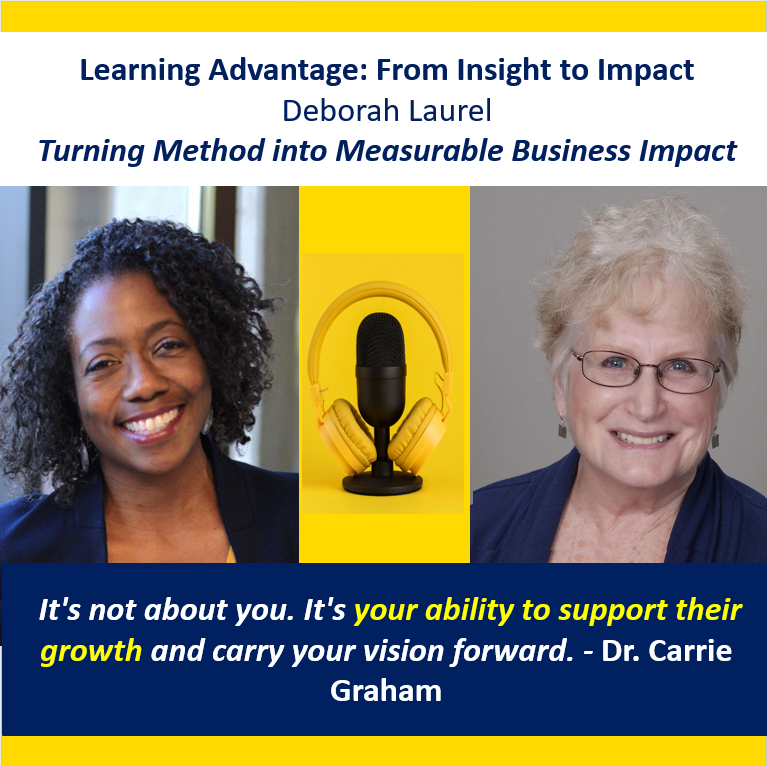
"It's not about you. It's your ability to support their growth and carry your vision forward."
1. The ERA Training Method Has Three Parts: Engagement, Retention, ApplicationEngagement means treating the learner as an individual, not a checkbox. Retention is how information is built so it's actually understood and remembered. Application is whether people have practiced the skill enough to use it with confidence, not just recognize it on a test.
2. Experienced Hires Still Need to Be Trained on Your OrganizationBringing in a seasoned leader from another company doesn't mean they'll succeed without onboarding. Skipping training on your specific culture, policies, and history is one of the most overlooked reasons experienced hires and the teams they lead don't stay.
3. A Healthcare Team's Presentation Success Rate Went From 20% to 90%When a healthcare division was being acquired, a team of four highly experienced clinicians struggled to advocate for patients in front of the business side. After training in psychological safety, empathetic communication, and emotional intelligence, their successful outcomes on high-stakes conversations went from roughly 2 in 10 to 9 in 10 within four months.
4. Knowing Information Is Not the Same as Having the SkillPeople can be fully engaged and understand the material and still lack the confidence to use it. Real competence requires practiced application, not just comprehension, the same way no one wants a surgeon who only learned technique from a book.
5. Leadership's Belief System Determines Whether Learning Survives the BudgetWhen leaders genuinely believe people move the organization forward, training and development doesn't get cut when times get tight. When the focus is bottom line only, learning is the first line item to go.
6. Fear of Losing Trained Employees Is the Wrong FrameSome leaders avoid investing in employees because they might leave for a competitor. The better goal is training people well enough that if they do leave, they leave saying great things about the organization that developed them.
7. Your Job Description Is Your First Training OpportunityA vague or incomplete job posting sets the tone before someone is even hired. Transparency about the role and the organization from the very first touchpoint shapes who applies and how prepared they are to succeed.
8. Trendy Learning Language Has Outpaced Its Own ResearchConcepts like rigid learning styles and micro-only learning became popular practice faster than they were properly applied. The fix isn't abandoning these tools, it's returning to training people as individuals instead of using shortcuts as a substitute for real design.
9. Most Organizations Collect Data but Can't Use ItMany businesses gather some form of workforce data but lack the ability to synthesize it into decisions that actually shape training and development. Understanding the employee profile in front of you, and building room for it to evolve, is where the real insight lives.
10. Great Leadership Development Isn't About the LeaderWhether it's a new CEO or a middle manager, the point of their development is their ability to carry the organization's mission and support their team's growth. The moment training becomes about the leader instead of the people they lead, it stops working.
1. Audit How You Onboard Experienced HiresBefore assuming a seasoned leader will "just know how to do it," build a structured process for training them on your organization's specific context, culture, and history.
2. Take the Free Training Assessment Quiz >>> here. Your score comes with a personalized report showing exactly where your training and development infrastructure needs attention first.
3. Build Practice Under Pressure Into Every Training ProgramInformation delivery alone doesn't build skill. Design training that gives people the chance to apply what they've learned in realistic, higher-stakes scenarios before they need it on the job.
4. Reframe How You Talk About Employee Development InternallyIf your leadership team hesitates to invest in training because people might leave, shift the conversation toward what it means for your reputation when well-trained people speak highly of your organization.
5. Rewrite Job Descriptions With Full TransparencyTreat your job postings as the first step in your training and development process. The clearer the expectations up front, the stronger the fit and retention down the line.
6. Personalize Training Instead of Defaulting to CategoriesMove away from one-size-fits-all learning style labels or generic microlearning modules. Ask what the specific individual in front of you actually needs to grow.
7. Start Collecting Workforce Data With a Clear Question in MindBefore gathering more data, define what decision you're trying to inform. Data that doesn't answer a specific question about your team won't improve your training strategy.
8. Ask Leadership a Hard QuestionWhen evaluating a training or development initiative, ask honestly: is this about supporting the team's growth, or is it about the leader's comfort and control?
9. Explore the Full ERA Framework in When Operations Meet PeopleCarrie's newly released book walks leaders through the belief systems, priorities, and vision that shape whether their operations and their people are working together or against each other.
10. Assess Whether Your Managers Have the Skills They NeedIf you're unsure whether your managers, leaders, or trainers are equipped to be effective, a leadership skills assessment is the starting point for building the right development plan alongside them.
Subscribe to get training and development insights that connect to real business outcomes—not just completion rates. Join here
Deborah Laurel is the host of The Learning Advantage: From Insight to Impact, a weekly LinkedIn Live spotlight on how smart learning fuels real business results. Each week, Deborah interviews leaders in management and learning and development, delivering actionable strategies, evidence-based design tips, and real-world case studies on how learning strengthens organizational health and drives profitability. Deborah is also the founder of Laurel and Associates, which has spent 40 years helping national and international managers build positive, supportive work environments and turn lackluster leaders into legendary ones.
Website: laurelandassociates.com
YouTube: https://www.youtube.com/@happy2lips
Get practical tools, strategies, and resources to design and deliver impactful training programs — right in your inbox.
.png)
Committed to provide research-informed, customized guidance to improve your training programs.
