
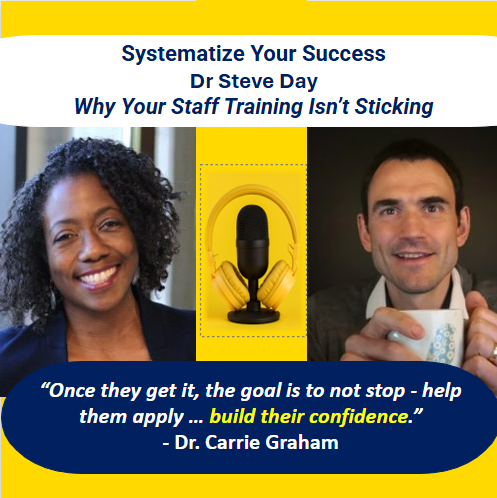
Listen here - https://www.youtube.com/watch?v=8TCZWdgPRFw
In this conversation with Dr. Steve Day on the Survive Your Success podcast, we explored how effective training design starts with understanding the learner, not showcasing the trainer's expertise. The discussion centered on adult learning theory and how to build training programs that employees actually comprehend and apply with confidence. We covered the importance of asking employees their opinions before diving into content, creating feedback loops at key milestones, and having the courage to scrap goals that aren't working. The conversation revealed how simple shifts in training design—from focusing on the user's context to building confidence through application—can transform professional development from a compliance exercise into real business impact.
1. Training Infrastructure MattersEffective training programs require more than just content—they need a solid infrastructure that aligns with organizational values and actually supports how employees learn and apply new skills.
2. Adult Learning Theory Changes EverythingThe best training design stems from adult learning theory, not social media hacks about auditory or visual learners. Understanding what's happening in employees' lives—from caregiving responsibilities to career transitions—creates training that actually sticks.
3. Ask Before You AssumeOne of the most powerful training design strategies is simply asking employees their opinions on topics before diving in. When people feel heard, they're motivated to engage even with difficult material.
4. Build Comprehension First, Application SecondTraining fails when it dumps information without building understanding. The goal isn't just to share knowledge—it's to help people comprehend it well enough to apply it with confidence.
5. Confidence Drives ImplementationMost businesses share information and stop. The missing piece is building employee confidence to actually apply what they've learned. Without this, training becomes a compliance check rather than a development opportunity.
6. Simple Feedback Loops Transform ResultsCreating milestones where employees do something and receive immediate feedback dramatically increases their willingness to keep going. This simple addition can be the difference between training that works and training that collects dust.
7. Clear Goals Prevent Getting StuckWhen business leaders don't have crystal-clear goals for their training programs, everyone gets stuck—the leader, the team, and the entire organization's forward momentum.
8. Know When to Scrap the GoalSometimes the courage to abandon a goal that's not working is more valuable than pushing through. Being willing to completely shift attention can ultimately get you back to your original objective through a better path.
9. Training Design Is About the LearnerThe most important principle in training development: it's not about you as the trainer or designer. It's about the user, the learner, and meeting them where they are.
10. Peace Signals True SuccessSuccess isn't just about business metrics—it's about achieving peace of mind in your work, peace about the people you're helping, and peace in your home. When these align, that's when you know you're truly successful.
1. Audit Your Training InfrastructureReview whether your training programs actually exist as a cohesive system or if they're scattered approaches. Identify gaps between your organizational values and what you're teaching employees.
2. Start With Employee ContextBefore designing your next training session, gather information about your team's life circumstances and responsibilities. Use this context to make the content immediately relevant to them.
3. Open Every Training With Their OpinionsBegin training sessions by asking employees what they think about the topic. This simple question grabs attention and creates motivation to engage with even challenging material.
4. Map Your Training to Comprehension LevelsDesign training content based on your team's current capacity to understand, not your expertise level. Remember the researcher who lost you five minutes in—don't be that presenter.
5. Create Confidence-Building CheckpointsAdd milestones throughout your training where employees apply what they've learned and receive feedback. This builds the confidence needed for real implementation.
6. Implement Review RequestsSet up a system where employees complete tasks at key points and get immediate or asynchronous feedback. This keeps momentum going and shows them they're on the right track.
7. Define Crystal-Clear Training GoalsGet specific about what you want your training to accomplish. Vague goals create stuck teams. Clear goals create forward movement.
8. Give Yourself Permission to PivotIf a training approach isn't working, be willing to scrap it and try something else. The courage to change direction often leads to better results than pushing through.
9. Shift Focus From Information to ApplicationDon't just share knowledge—build systems that help employees apply it. The gap between knowing and doing is where most training fails.
10. Seek Peace as Your Success MetricEvaluate your training programs not just by completion rates but by whether they create peace—for you as a leader and for your team in doing their work more effectively.
Subscribe to get training and development insights that connect to real business outcomes—not just completion rates. Join here
Steve moved to Sweden in 2015 and transformed how he ran his businesses—switching to a fully remote model. A former NHS doctor, with a background in computing and property investing, he now helps overwhelmed business owners systemise and outsource effectively. Additionally, through his courses and coaching, Steve teaches how to automate operations and work with affordable virtual assistants, freeing up time and increasing profits. He runs his UK-based businesses remotely with support from a team of UK and Filipino VAs. He is also passionate about helping others build scalable, stress-free companies using smart systems and virtual support.
Get practical tools, strategies, and resources to design and deliver impactful training programs — right in your inbox.
.png)
Committed to provide research-informed, customized guidance to improve your training programs.
