
Listen Here > https://www.youtube.com/watch?v=rPVGGxfZtDQ&list=PLFWH7s9ST2L6Jxq7H0SAvZXd-p6mJsbNq&index=93
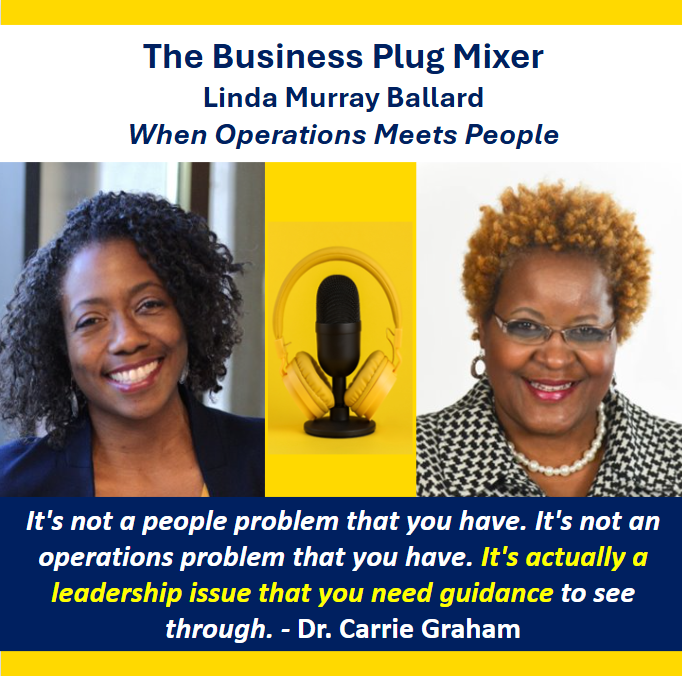
In a candid conversation with Linda Murray Bullard on The Business Plus Mixer, we unpacked what happens when ambitious, intelligent executives mistake a leadership problem for a people problem or an operations problem. The discussion centered on the core message of When Operations Meet People—that executives sitting in leadership positions need guidance to see through the real issue blocking their organization's progress. We walked through why experienced hires fail without organizational culture training, explored how vision and mission cannot live in a leader's head, and discussed why the evolution of business standards means there is no longer a "one-size-fits-all" playbook for managing teams. What emerged most powerfully is this: effective leaders are those grounded in who they are, crystal clear on their strengths and growth areas, and willing to create psychological safety where every team member's experience and voice matter.
1. The Three Elements Executives Miss
Highly ambitious, skilled executives with exceptional intelligence are often missing one critical element: clarity on how their leadership directly influences both the operations and the people in their organization. Without this connection, they default to blaming either the team or the systems when the real issue sits in the leadership seat.
2. Vision Cannot Live in Your Head
When founders and executives keep their vision locked in their minds, they become frustrated with teams who aren't "getting it." The team doesn't know what they don't know. A frustrated leader is often a leader who hasn't translated their internal vision into a clear, communicable direction their people can follow and buy into.
3. Executive Hires Need Training on Organizational Culture
One of the most overlooked reasons experienced hires fail is the assumption that a strong resume means immediate success. Large organizations hire based on professional credentials—which is correct—but then stop there. Every person, regardless of title or rank, must understand the culture of their new organization and how to communicate within it.
4. The Emotion Piece Gets in the Way
Executives genuinely want their operations to be seamless and their people to thrive. The disconnect comes when emotion clouds the path forward. When operations and people meet—without emotional clarity—there's clashing. It's easier to point fingers at people or systems than to sit with the hard reality of what's actually happening.
5. Covey's Seven Habits Still Speak to Today's Leaders
Timeless wisdom doesn't expire. Frameworks like beginning with the end in mind remain relevant because leaders' core struggles—clarity of vision, understanding mission, and leading with intention—haven't changed in 30 years, even as everything else has.
6. Business Standards Are No Longer Standard
There used to be consistent business practices that worked across organizations. A leader could move from Company A to Company B and find the same operational landscape. That era is gone. Leaders today must adapt to changing workforce expectations, generational differences, and evolving workplace norms—and their teams need training to do the same.
7. Experienced Employees Still Need Re-Education and Skill Development
Leaders managing businesses for 10, 12, or 15 years often need to go back and re-educate their staff on foundational elements. Creating SOPs, slowing down long enough to not run off and leave the team, and building structured knowledge transfer are training and development investments that matter.
8. Leaders Who Are Grounded Lead Better
The most effective leaders are those who are crystal clear on who they are, their skill set, their strengths, and where they need growth. This grounding—not false confidence from decades of experience—creates the vulnerability and grace that allows others to follow.
9. About One-Third of Workers Report Poor Management
According to SHRM research, approximately one-third of workers report experiencing poor management and ineffective senior leadership within their organizations. This data reflects what Dr. Graham sees firsthand: when leadership issues go unaddressed, they ripple through the entire organization's culture and performance.
10. Create Psychological Safety Where Every Experience Counts
Effective teams have a culture where people feel safe sharing problems and bringing solutions—not where they either dump everything on the leader or stay silent from fear. When a leader creates space for all voices and recognizes that each person's experience is valid, regardless of whether every idea is enacted, the organization moves forward with collective intelligence.
1. Audit Your Leadership Belief System
Before blaming your people or your operations, sit with this question: What do I actually believe about how my leadership influences this organization? Write it down. Get specific. Your belief system directly impacts what you see as the problem.
2. Get Your Vision Out of Your Head
Schedule time this week to articulate your vision and mission clearly enough that someone outside your organization could understand it. Then share it with your leadership team. Repeat it. Make it real and communicable, not abstract.
3. Train Every New Hire—Regardless of Experience Level
Create a structured organizational culture onboarding for every person who joins, from entry-level to C-suite. Include how communication happens in your organization, what your culture values look like in action, and how decisions get made.
4. Take the Free Training Assessment Quiz
here. Your score comes with a personalized report showing exactly where your training and development infrastructure needs attention first and what's actually driving your leadership frustration.
5. Reframe the "Why Are My People Not Buying In" Question
Before deciding you have a people problem, ask: Do my people actually know what my vision and mission are? Have they heard it from me directly? Have they had a chance to ask questions about it? This often shifts the entire conversation.
6. Identify Where You're Grounded (and Where You're Not)
Write down your top three strengths and where you genuinely need additional growth as a leader. The clarity itself makes you a more effective leader because you stop pretending and start showing up with vulnerability and authenticity.
7. Evaluate Your Team's Psychological Safety
Ask yourself honestly: Do my people feel safe bringing me problems without fear of blame? Do they bring solutions or just complaints? If the answer is no to either, you have a culture issue—not a team issue. Design interventions around safety and empowerment, not accountability.
8. Stop Assuming People Know What You Know
Look at one major initiative, process, or decision in your organization. How many times have you communicated it to your team? Now ask your team what they understand. The gap is usually where communication broke down, not where people failed.
9. Invest in Professional Development That's Personalized
Move away from generic leadership training or one-size-fits-all development. Work with someone who will ask what your specific leader or team needs in order to grow—not what the training industry says they should need.
10. Schedule a Strategic Training Assessment
If you're still unsure whether your challenge is training, operations, or leadership, a 90-minute audit from an expert is worth the investment. A Strategic Training Assessment with Dr. Graham ($500) includes a full recommendation report that tells you exactly what to address first.
Subscribe to get training and development insights that connect to real business outcomes—not just completion rates. Join here
Linda Murray Bullard, known as The Business Plug, hosts The Business Plus Mixer—a podcast where business conversations happen between business people for business people. Linda is passionate about elevating entrepreneurs and business owners through authentic conversation, shared wisdom, and real-world strategies. She brings decades of business experience and a keen ability to ask the questions that matter.
Beyond the podcast, Linda is also dedicated to helping women over 50 define their next chapter through her "Find Your Life" initiative and community events. Her approach to business and mentorship centers on recognizing that everyone has value to contribute and that the best leaders are those who create space for others to show up fully.
The Business Plus Mixer airs Sundays at 7:00 p.m. Eastern time.
To connect with Linda or be a guest on The Business Plus Mixer:
Listen on Spotify, YouTube, and all major podcast platforms.
Get practical tools, strategies, and resources to design and deliver impactful training programs — right in your inbox.
You can unsubscribe anytime. For more details, review our Privacy Policy.
Questions about your training and development program?
Or start with the Free Training Assessment Quiz to get your personalized score and insights.
Get Carrie's book When Operations Meet People — Available now.
Get practical tools, strategies, and resources to design and deliver impactful training programs — right in your inbox.
.png)
Committed to provide research-informed, customized guidance to improve your training programs.
